Museo Egizio visitor guide in Turin
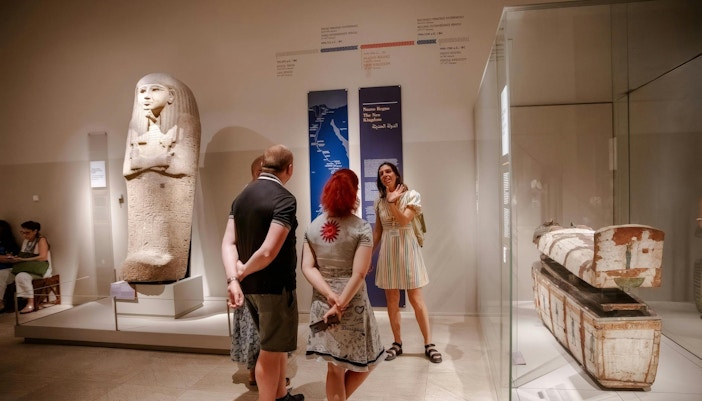
The Museo Egizio is Turin’s flagship Egyptian antiquities museum, best known for its intact tomb assemblages, colossal royal statues, and one of the deepest Egyptology collections outside Cairo. The visit is spread across multiple levels and usually takes longer than people expect, especially once you reach the Kha and Meryet galleries and the Hall of Kings. The biggest difference between a rushed visit and a rewarding one is choosing the right time slot and pacing your route. This guide covers timing, tickets, layout, and what to prioritize.
Quick overview: Museo Egizio at a glance
If you want the visit to feel calm rather than crowded, a little planning goes a long way here.
- When to visit: Weekday first-entry slots are noticeably calmer than late morning and weekend arrivals, because tour groups and school visits build up as the day goes on and the galleries can feel tight once rooms fill.
- Getting in: From €15 for standard entry. Museum-led guided tours start from €70 plus entry for small groups. Advance booking matters most for spring weekends, holiday periods, and special exhibitions because entry is tied to a strict timed slot.
- How long to allow: 2–3 hours for most visitors. It pushes closer to 3 hours if you use the included audio guide properly, pause at the café, or spend time in the Kha and Meryet rooms.
- What most people miss: The Temple of Ellesiy, the Turin King List papyrus, and the rooftop Egyptian Garden are easy to rush past on the way to the Hall of Kings.
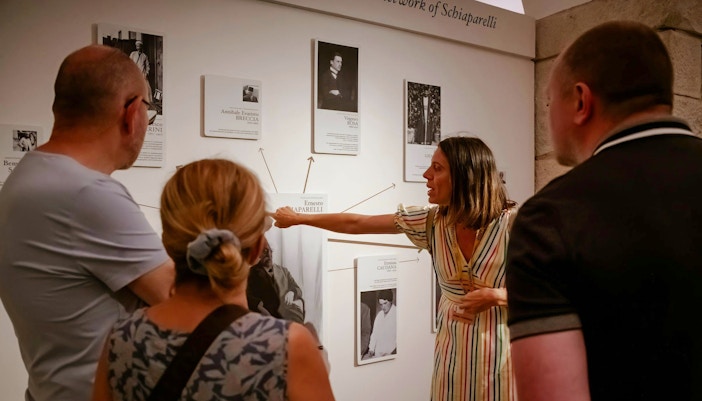
- Is a guide worth it? Yes if you want deeper context on the collection’s chronology and excavation history, but the included audio guide is enough for a strong self-guided first visit.
🎟️ Timed tickets for Museo Egizio can sell out several days in advance during spring weekends and holiday periods. Lock in your visit before the time you want is gone. See ticket options
Jump to what you need
Where and when to go
How much time do you need?
| Visit type | Route | Duration | Walking distance | What you get |
|---|---|---|---|---|
Highlights only | Entry → main historical galleries → Kha and Meryet → Hall of Kings → exit | 1.5–2 hrs | ~1 km | You cover the headline rooms and biggest objects, but the papyri and quieter scholarly sections will feel rushed or skipped. |
Balanced visit | Entry → chronological galleries → Kha and Meryet → papyri rooms → Hall of Kings → Temple of Ellesiy → garden | 2–3 hrs | ~1.5 km | This gives you the museum’s major strengths without racing, including time for Ellesiy and the rooftop breather many visitors miss. |
Full exploration | Full chronological route across all levels → Kha and Meryet → papyri collection → Hall of Kings → Temple of Ellesiy → Egyptian Garden → café break | 3+ hrs | ~2 km | You can slow down for labels, audioguide stops, and a café break, but the density of the galleries makes this the most mentally demanding route. |
Which Museo Egizio ticket is best for you
| Ticket type | What's included | Best for | Price range |
|---|---|---|---|
Museum-led guided tour | Timed entry + Egyptologist guide | A first visit where you want the highlights explained clearly and the freedom to ask questions as you go | From €32 |
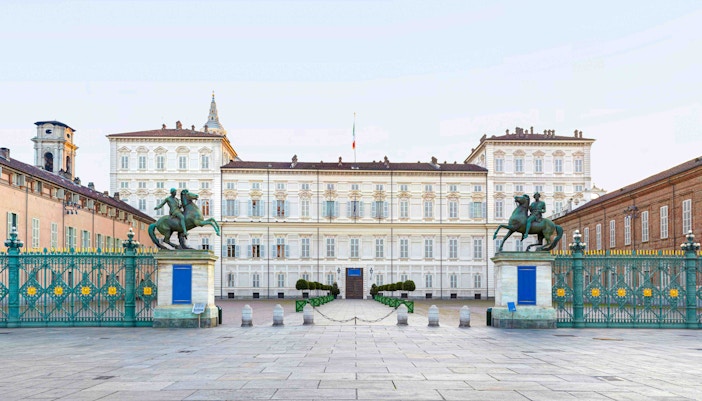
Museo Egizio + Royal Palace combo tour | Entry to Museo Egizio + paired visit to the Royal Palace | A same-day Turin plan where you want 2 major historic sights without organizing separate visits and transit | From €145 |
How do you get around Museo Egizio?
Where are the masterpieces inside Museo Egizio?
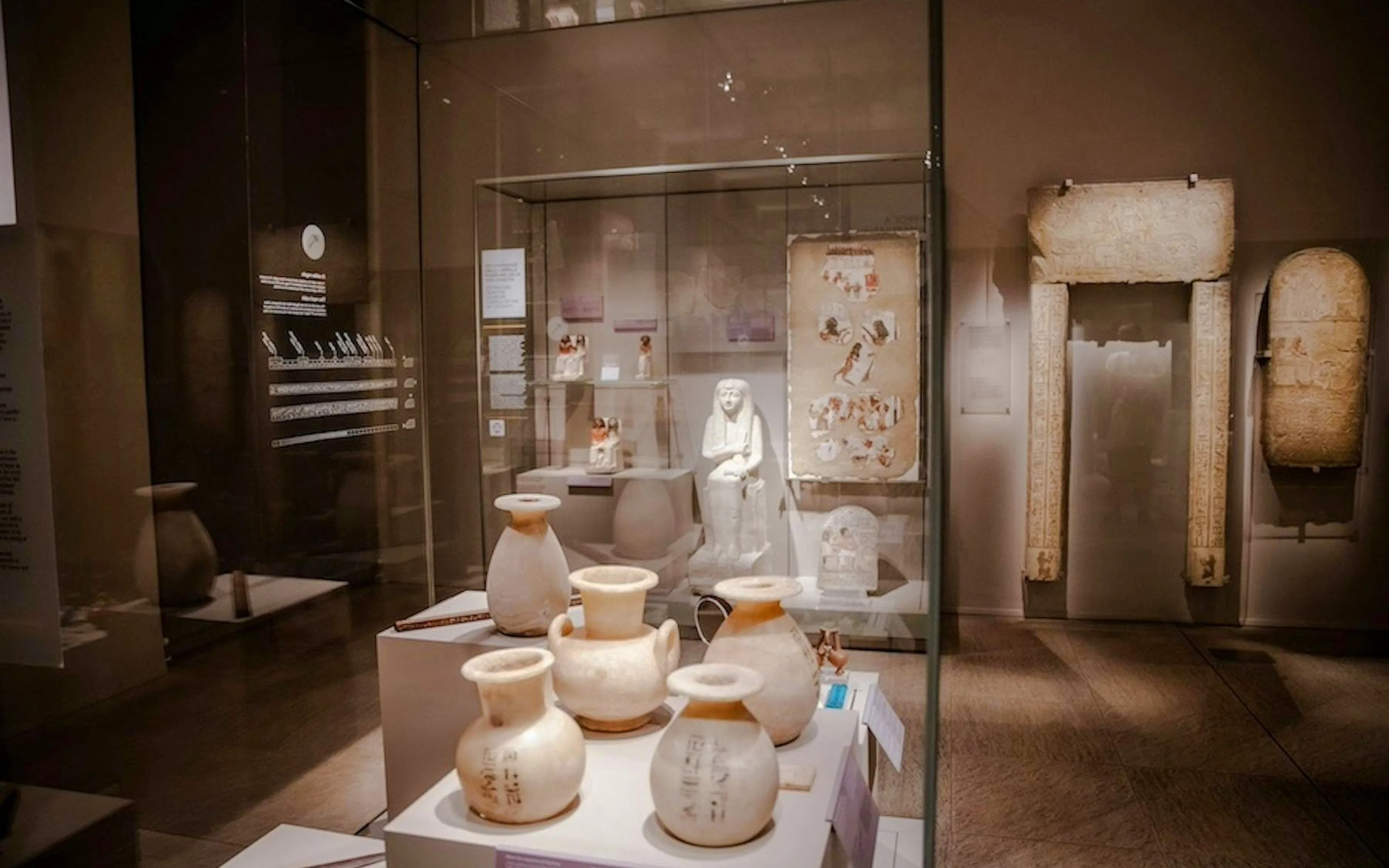
Tomb of Kha and Meryet
Era: 18th Dynasty
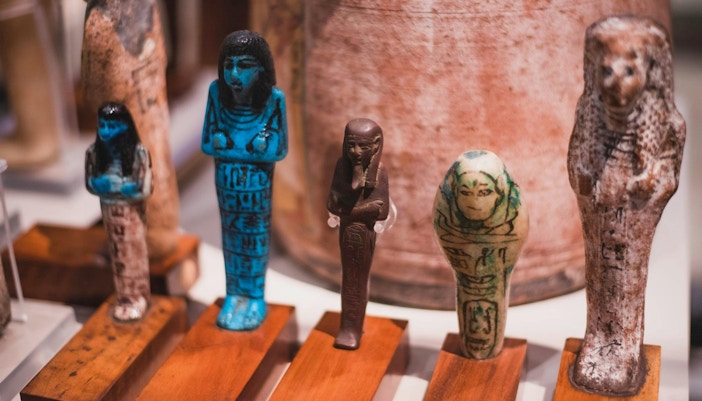
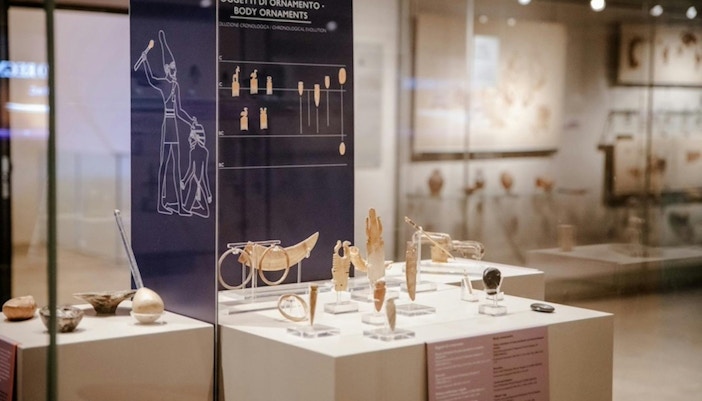
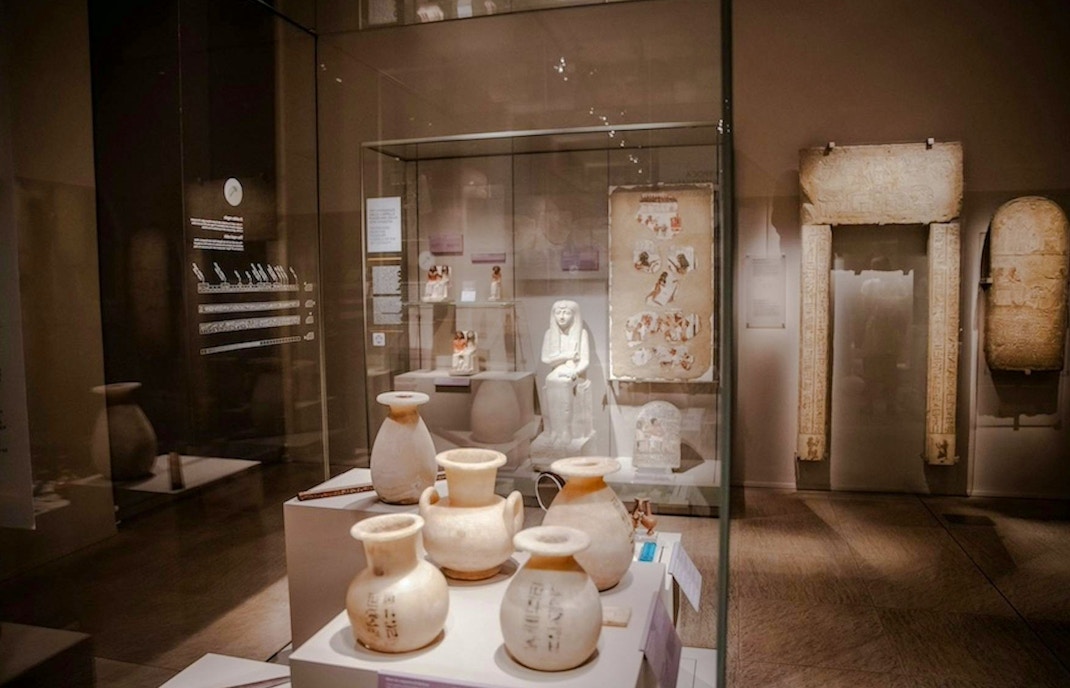
This is one of the museum’s most rewarding rooms because it preserves an intact funerary assemblage rather than isolated masterpieces. You’ll see chests, tools, jars, amulets, and burial goods displayed in a way that still feels close to the original discovery. Most visitors focus on the larger objects first and rush past the smaller domestic items, even though those details are what make the room feel like a real life — and death — archive.
Where to find it: Third floor, in the Deir el-Medina collection galleries.
Hall of Kings
Era: New Kingdom and later royal sculpture
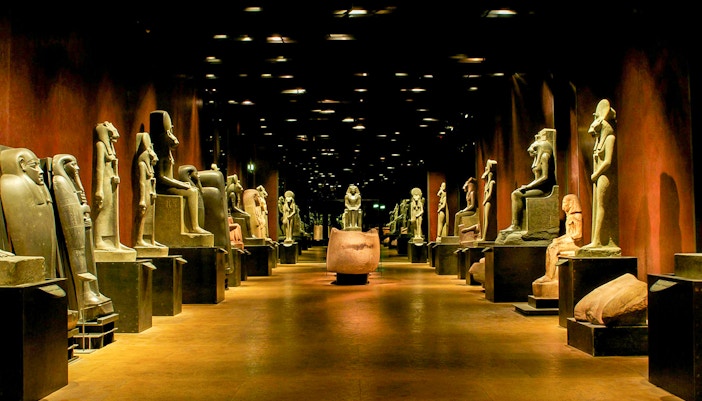
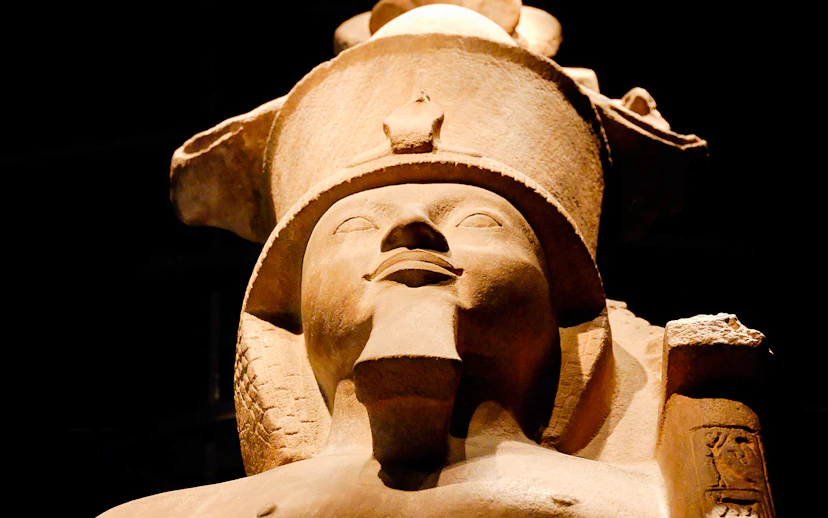
The Hall of Kings is the museum’s theatrical finale: towering statues, dim lighting, mirrored surfaces, and some of the collection’s strongest visual impact in one room. It’s worth slowing down here instead of treating it like a quick photo stop, because the scale only really lands when you walk the room fully. Many visitors miss the reconstructed Ramses II temple section because they’re looking up at the statuary instead of scanning the whole gallery.
Where to find it: Near the end of the museum route, in the final large royal-sculpture gallery.
Temple of Ellesiy
Type: Rock-cut temple relocated from Nubia
This small sanctuary is easy to underestimate because it sits just off the museum’s biggest showpiece rooms, but it’s one of the most unusual things in the building: an authentic Egyptian temple installed in Turin. What makes it memorable is the physical feeling of stepping into the carved space rather than viewing fragments in a case. Visitors often skim its reliefs and move on too quickly after the Hall of Kings.
Where to find it: In the gallery adjoining the Hall of Kings.
Turin King List and papyri
Type: Royal chronology and documentary papyri
If you care about how ancient Egyptian history is reconstructed, this is one of the museum’s most important stops. The Turin King List is a key chronological source, and the papyrus displays reward careful reading more than a fast visual pass. Most visitors miss their significance because the cases are quieter and less immediately dramatic than the monumental sculpture nearby.
Where to find it: In the papyrus displays near the Ramses II and Hall of Kings area.
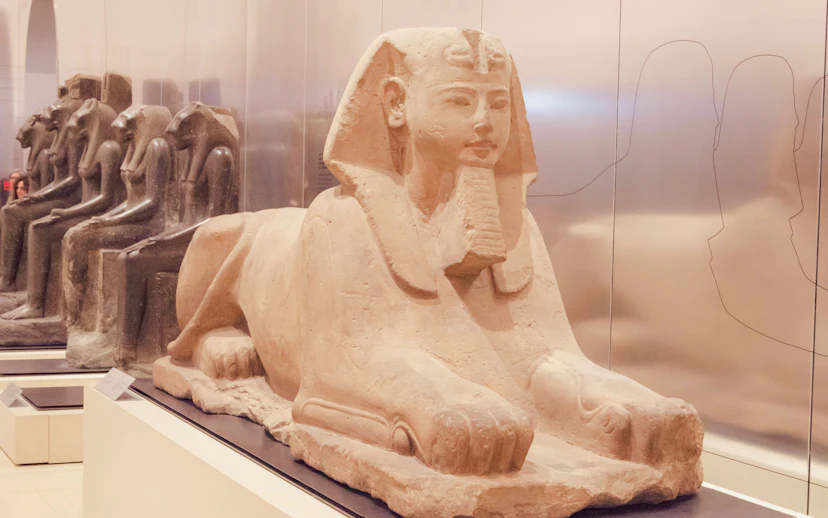
Gallery of the Sphinx
Type: Royal stone sculpture
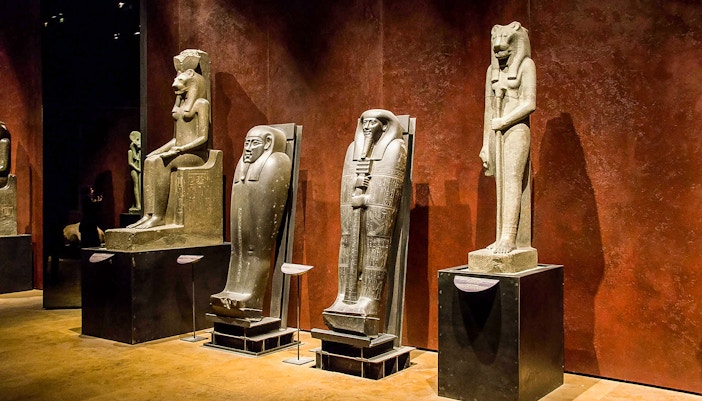
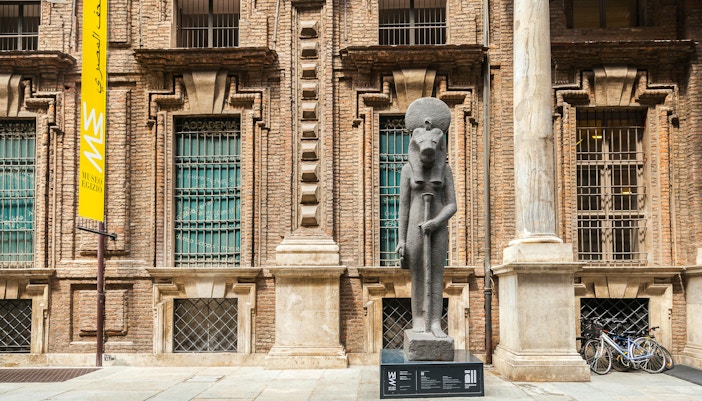
The Sphinx gallery works best when you treat it as more than a transition space between headline rooms. The sculpture itself is impressive, but the real payoff is seeing it in conversation with the seated royal and divine figures around it. Many people stop for a quick look and move on, missing how much the surrounding display sharpens the sense of Egyptian kingship and iconography.
Where to find it: In the royal-sculpture sequence near the Hall of Kings.
Egyptian Garden
Type: Rooftop interpretive garden
The rooftop Egyptian Garden is not an ancient artifact, but it’s one of the smartest pauses in the visit. It gives you air, light, and a mental reset between dense galleries, with plantings tied to ancient Egyptian flora and everyday use. Because it isn’t part of the ‘must-see’ artifact list, many visitors skip it entirely — which is exactly why it feels calmer than the galleries below.
Where to find it: On the museum’s rooftop terrace.
Facilities and accessibility
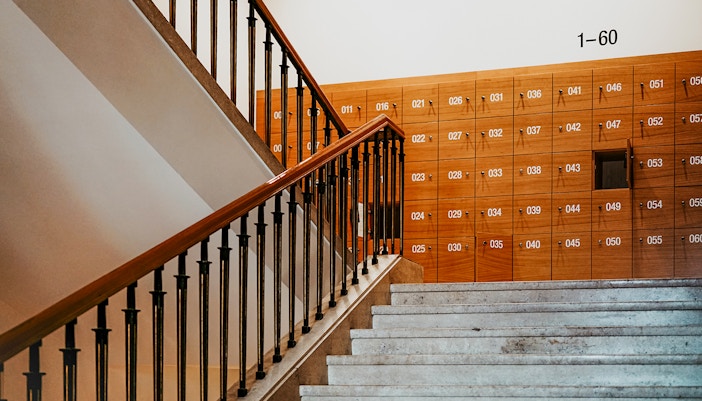
- 🎒 Cloakroom / lockers: A cloakroom is available at the entrance, and large backpacks are not permitted into the galleries.
- 🍽️ Café: The on-site café sits midway through the visit near the Kha and Meryet area, so it works well for a planned break rather than a pre-entry snack.
- 🛍️ Gift shop / merchandise: The ground-floor shop is worth saving a few minutes for if you want exhibition catalogs, Egyptology books, or smarter souvenirs than generic city-center gifts.
- 🪑 Seating / rest areas: Seating is limited enough that visitors who need regular pauses should plan a café stop rather than relying on gallery benches.
- 👃 Sensory features: The ‘Egizio Essenziale’ scent boxes in the galleries add a rare multi-sensory layer to the visit and are easy to miss if you move too quickly.
- ♿ Mobility: Most of the museum is wheelchair accessible, with elevators serving all floors, though crowded rooms can still make maneuvering slower at peak times.
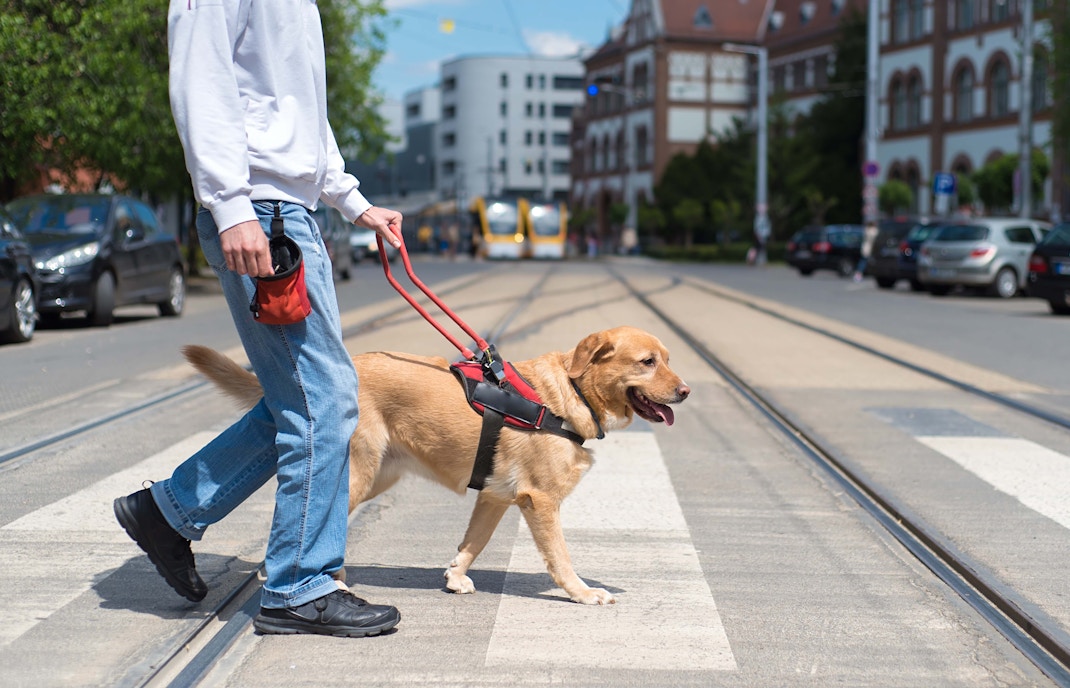
- 👁️ Visual impairments: The included audio guide helps if you prefer spoken interpretation, and staff can direct you at arrival toward the best way to follow the route.
- 🧠 Cognitive and sensory needs: Human remains are clearly flagged in the galleries, which makes it easier to avoid sensitive sections without losing the whole visit.
- 👨👩👧 Families and strollers: The museum is manageable with strollers thanks to elevator access, but tighter gallery spaces are much easier to navigate in quieter first-entry slots.
Museo Egizio works well for school-age children and curious teens because the objects are visually strong, the route is clear, and the museum has enough interactive touches to break up the denser history.
- 🕐 Time: 90 minutes to 2 hours is realistic with younger children, and the Kha and Meryet rooms plus the Hall of Kings are the strongest sections to prioritize.
- 🏠 Facilities: The mid-visit café is the most useful family stop because it gives you a real reset point without ending the route early.
- 💡 Engagement: Use the scent boxes and ask children to spot everyday objects like tools, boxes, and jars before you focus on statues and mummies.
- 🎒 Logistics: Bring only a small bag, book an early weekday slot, and avoid stacking too many other museums into the same day.
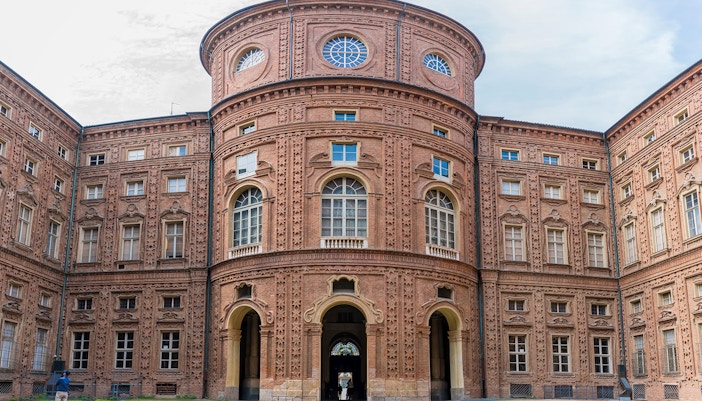
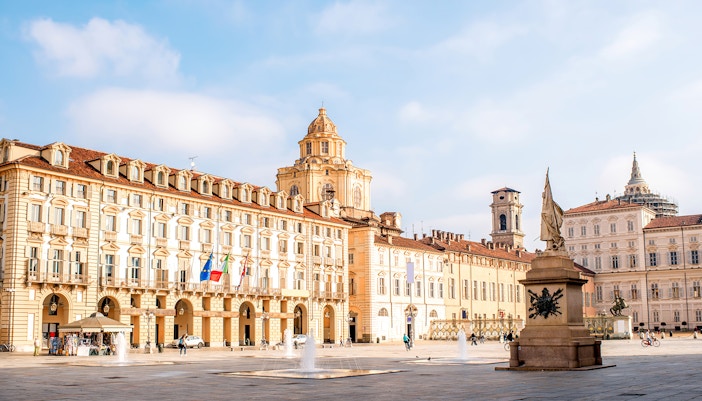
- 📍 After your visit: Piazza Castello is right outside, which gives children space to decompress before you decide on lunch or your next stop.
Rules and restrictions
Practical tips
- Booking and arrival: Book several days ahead for normal weekdays and earlier for spring weekends or holiday periods; if you’re late, don’t count on flexible admission because timed entry is enforced closely.
- Pacing: Don’t burn all your focus in the opening galleries — save time and energy for the Kha and Meryet rooms and the Hall of Kings, which are the visit’s real payoff.
- Crowd management: The first weekday slot is the sweet spot here because group traffic builds later and the museum’s tighter rooms feel much more manageable early on.
- What to bring or leave behind: Bring a small bag only; the no-backpack rule is real, and traveling light makes the multi-floor route much easier.
- Food and drink: If you’re doing the full 2–3-hour route, plan a café break near the Kha and Meryet section instead of pushing through hungry and rushing the second half.
- Audio guide use: The included guide is worth using selectively rather than nonstop — choose the tomb assemblage, papyri, and Hall of Kings for the richest payoff.
- Sensitive content: If human remains are not for you or your travel companions, pay attention to the gallery notices early so you can reroute without losing the rest of the visit.
What else is worth visiting nearby?
Eat, shop and stay near Museo Egizio
- On-site: The museum café sits inside the route near the Kha and Meryet galleries, and it’s best used as a convenient mid-visit pause rather than your main Turin meal.
- 💡 Pro tip: If food matters to you, eat before or after your visit and use the museum café only as a reset point — it keeps the route flowing without forcing you back outside.
- Museo Egizio gift shop: Ground floor, with exhibition catalogs, Egyptology books, and better museum-led souvenirs than the generic options around major squares.
Yes — if your priority is walkability and easy access to Turin’s historic center, the area around Piazza Castello is a strong base. It suits short stays especially well because you can pair the museum with other central sights on foot. It’s less compelling if you care more about nightlife or rail convenience than being in the middle of the old center.
- Price point: The historic-center area tends to skew medium to high, especially around the grand piazzas and landmark streets.
- Best for: Travelers on a short city break who want to walk to major sights and keep museum-day logistics simple.
- Consider instead: Stay nearer Porta Nuova if train access matters more, or choose a more food-focused neighborhood if you want evenings built around restaurants rather than landmark proximity.
Frequently asked questions about visiting Museo Egizio
Most visits take 2–3 hours. If you use the included audio guide properly, pause at the café, and spend time in the Kha and Meryet galleries, you’ll land closer to 3 hours rather than 2.
Yes, you should book in advance because entry is tied to a timed slot bought online. This matters most on spring weekends, holiday periods, and around special exhibitions, when the most convenient morning times go first.
Yes, pre-booked timed entry is worth it, but an extra fast-track upgrade adds less value here than it does at huge open-air landmarks. Once you already have a timed ticket, the bigger win is choosing a good slot rather than paying much more to shave off a short queue.
Arrive 10–15 minutes early. That gives you enough time for scanning and any bag or access checks without turning up so early that you’re just standing outside waiting for a slot that won’t be opened ahead of time.
You can bring a small bag, but large backpacks are not allowed in the galleries. If you’re coming straight from the train or carrying extra layers, plan around the cloakroom so you don’t lose time at the entrance.
Yes, no-flash photography is allowed. The Hall of Kings is especially photogenic, but you’ll get better results in the quieter first-entry slots when you’re not trying to shoot around dense groups.
Yes, and the museum offers guided options for both small groups and larger groups. Small-group tours work better if you want to ask questions, while larger groups are more cost-efficient but naturally move at a steadier, less flexible pace.
Yes, especially for children who like objects, stories, and visually dramatic rooms. Most families do best with a 90-minute to 2-hour visit focused on the Kha and Meryet galleries, the scent boxes, and the Hall of Kings rather than trying to cover every room.
Mostly yes, with elevators serving all floors. The main limitation is crowding rather than access hardware, since tighter rooms can become slower to navigate later in the day.
Yes, there’s an on-site café inside the museum route. It’s useful for a short break, but if you want a proper lunch, it’s better to treat the café as a convenience stop and eat before or after your visit in central Turin.
Yes, both are available, and the audio guide is included with admission. For most visitors, the included guide is enough, while a museum-led tour makes the biggest difference if you want deeper context on chronology, excavation history, and standout objects.
The Kha and Meryet tomb assemblage, the Hall of Kings, and the Temple of Ellesiy are the strongest priorities. If you still have time after those, add the Turin King List papyrus and the rooftop Egyptian Garden for a more rounded visit.